
SAP Supply Chain Orchestration, with general availability planned for the first half of 2026, functions as a central AI-driven layer that coordinates planning, procurement, manufacturing, logistics and the extended network in real time. It detects multi-tier risks (suppliers, logistics, disruptions) early, analyses their impact on your specific operations, and triggers coordinated responses using Joule AI agents.
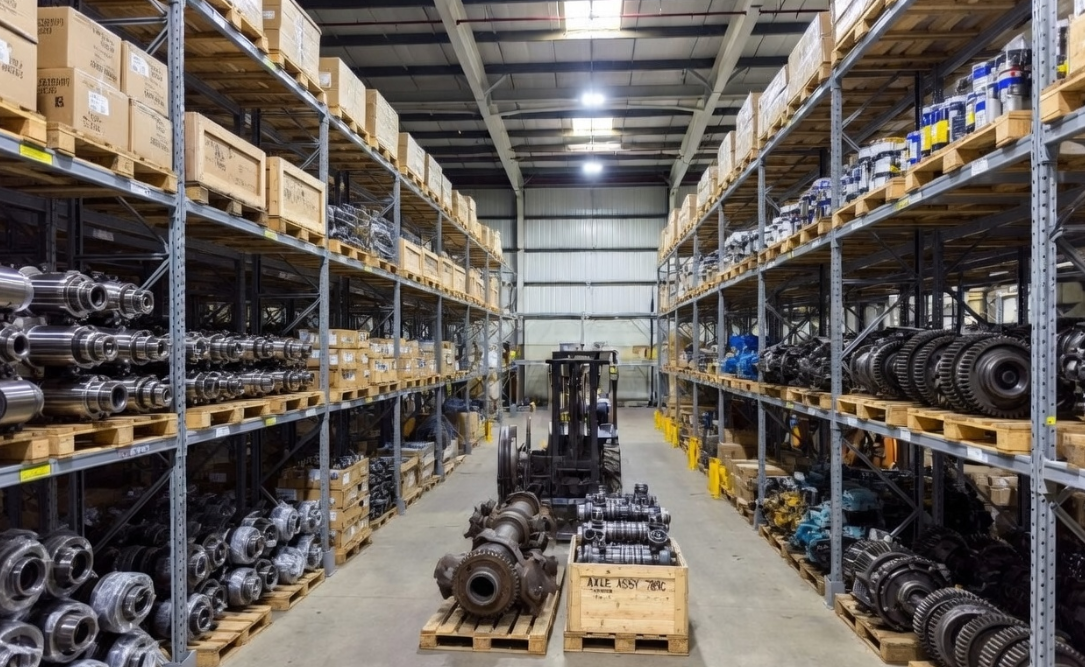
In a mining MRO environment, this supports spare parts management by linking asset performance data with broader supply chain signals. It helps address delays that affect critical components for haul trucks, excavators or crushers, reducing the risk of unplanned downtime through faster stock adjustments, transfers or expedites.
Role of SAP Integrated Business Planning (IBP) for MRO
The detailed MRO inventory optimisation sits primarily in SAP IBP. Mining spare parts demand is typically intermittent and lumpy, driven by equipment failures, preventive schedules and variable operating conditions. IBP handles this with:
- Demand forecasting that combines historical consumption, predictive maintenance inputs and machine learning.
- Multi-echelon inventory optimisation to set safety stocks, reorder points and target levels across central warehouses, site stores and remote locations.
- The MRO Inventory Planning Operator, using algorithms suited to sporadic demand (such as Croston or Poisson-based methods).
- AI-assisted MRO inventory analysis (available since the 2602 release), which provides a concise business-language summary of planning results, highlights key inputs and settings, and reduces analysis time by around 30%. Planners can review recommendations directly in the Planner Workspace or Excel add-in.
How Orchestration and IBP Align
IBP calculates optimal inventory parameters and plans. Orchestration monitors the external environment in real time, senses risks, assesses context-specific impacts and orchestrates execution across systems (S/4HANA, EWM, procurement and the SAP Business Network). The combination provides both tactical precision for MRO spares and strategic resilience against supply disruptions common in remote mining operations.
Mining examples, such as Roy Hill, have shown 10–20% reductions in inventory for critical components while maintaining or improving availability through similar IBP-led approaches. Newmont has also used IBP for MRO to improve forecasting accuracy for preventive and corrective maintenance.
As of April 2026, Orchestration is rolling out with full AI capabilities targeted for Q2 2026, while IBP continues to receive quarterly enhancements focused on MRO explainability and integration. In asset-intensive mining, the two layers together address the common pattern of excess slow-moving stock alongside critical shortages.